Beyond Worksheets: Teacher–Student Interpersonal Communication and the Construction of Learning Independence in the Kumon Method
Keywords:
Communication, Teacher-Student Interaction, Learning Independence, Kumon MethodAbstract
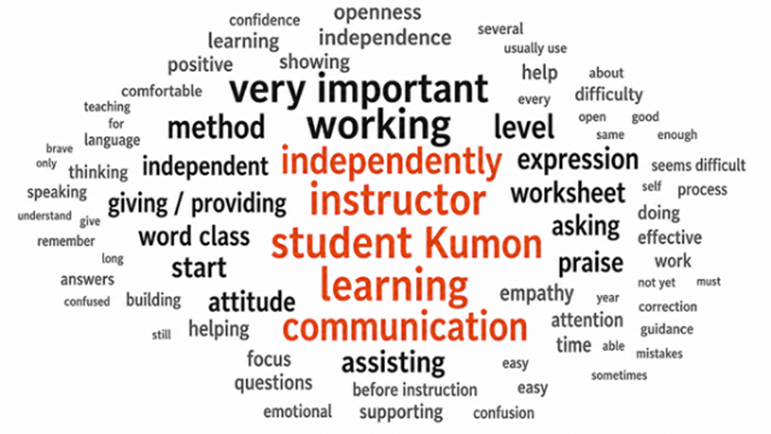
Independent learning in educational contexts is often associated with students' ability to complete tasks autonomously; however, autonomy is not developed solely through learning materials or repetitive practice. This study examines how teacher–student interpersonal communication contributes to the construction of learning independence in the Kumon method. Moving beyond the assumption that Kumon relies primarily on worksheets, this research conceptualizes communication as a relational and symbolic process through which students interpret guidance, correction, praise, and learning challenges. Using an interpretive qualitative case study approach at Kumon Green Lake City in Tangerang, data were collected through in-depth interviews with two instructors and three students, supplemented by observations, documentation, and NVivo-assisted thematic analysis. The findings reveal that learning independence is constructed through the interaction between structured worksheets and supportive communication practices, including brief instructions, adaptive guidance, positive reinforcement, and nonverbal immediacy. This study contributes to educational communication by demonstrating that independence is not achieved through teacher absence but through meaningful interactions that transform external support into students' internal capacity for learning.
References
Ahmadi, A., Noetel, M., Parker, P., Ryan, R. M., Ntoumanis, N., Reeve, J., Beauchamp, M. R., Dicke, T., Yeung, A., Ahmadi, M., Bartholomew, K., Chiu, T. K. F., Curran, T., Erturan, G., Flunger, B., Frederick, C., Froiland, J. M., González-Cutre, D., Haerens, L., Lonsdale, C. (2023). A classification system for teachers’ motivational behaviors recommended in self-determination theory interventions. Journal of Educational Psychology, 115(8), 1158–1176. https://doi.org/10.1037/edu0000783.
Amin, A., Alimni, Kurniawan, D. A., Triani, E., & Pratama, W. A. (2022). Implications of teacher interpersonal communication ability on student learning motivation in Islamic religious education lessons during pandemic. Journal of Education Research and Evaluation, 6(1), 156–167. https://doi.org/10.23887/jere.v6i1.39547.
Bai, B., Zang, X., Song, H., & Nie, Y. Y. (2025). The relationship between teachers’ support and students’ self-regulation in ESL collaborative learning in Hong Kong primary schools: The mediating role of students’ motivation. Innovation in Language Learning and Teaching, 1–20. https://doi.org/10.1080/17501229.2025.2533973.
Braun, V., & Clarke, V. (2021). One size fits all? What counts as quality practice in reflexive thematic analysis? Qualitative Research in Psychology, 18(3), 328–352. https://doi.org/10.1080/14780887.2020.1769238.
Dan, Q., & Bai, B. (2025). Classroom relationships and self-regulated learning strategy use among EFL students: The mediating role of emotions. European Journal of Psychology of Education. https://doi.org/10.1007/s10212-025-01021-w.
Derakhshan, A., Zhang, L. J., & Zhaleh, K. (2023). The effects of instructor clarity and non-verbal immediacy on Chinese and Iranian EFL students’ affective learning: The mediating role of instructor understanding. Studies in Second Language Learning and Teaching, 13(1), 71–100. https://doi.org/10.14746/ssllt.31733.
Dhakal, K. (2022). NVivo. Journal of the Medical Library Association, 110(2), 270–272. https://doi.org/10.5195/jmla.2022.1271.
Froment, A., & Gutiérrez, D. (2022). The relationship between teacher care, credibility, and students’ classroom engagement. Teaching and Teacher Education, 117, Article 103824. https://doi.org/10.1016/j.tate.2022.103824.
Hu, L., & Wang, Y. (2023). The influence of teacher immediacy on Chinese high school students’ willingness to communicate and academic engagement. Asia Pacific Education Review, 24, 169–184. https://doi.org/10.1007/s12564-023-09766-4.
Jaya, H., Andriani, L. A., & Wijayanto, A. (2023). The effect of lecturer immediacy behaviors on students’ willingness to communicate in EFL classrooms. Indonesian Journal of English Language Teaching and Applied Linguistics, 8(1), 123–138. https://doi.org/10.21093/ijeltal.v8i1.1274.
Jederlund, U., & von Rosen, T. (2023). Teacher–student relationships and students’ self-efficacy beliefs: Rationale, validation and further potential of two instruments. Education Inquiry, 14(4), 529–553. https://doi.org/10.1080/20004508.2022.2073053.
Jin, S.-H., Im, K., Yoo, M., Roll, I., & Seo, K. (2023). Supporting students’ self-regulated learning in online learning using artificial intelligence applications. International Journal of Educational Technology in Higher Education, 20, Article 37. https://doi.org/10.1186/s41239-023-00406-5.
Liu, W. (2021). Does teacher immediacy affect students? A systematic review of the association between teacher verbal and non-verbal immediacy and student motivation. Frontiers in Psychology, 12, Article 713978. https://doi.org/10.3389/fpsyg.2021.713978.
Marwiji, M. H., & Mariah, E. Y. (2021). Hubungan komunikasi interpersonal guru dengan kemandirian belajar siswa pada masa pandemi Covid-19. Jurnal Jendela Pendidikan, 1(3), 105–111. https://doi.org/10.57008/jjp.v1i03.18.
Matulaitienė, J., Kaminskienė, L., Monkevičienė, O., & Lehtinen, E. (2025). Teacher- and student-related factors supporting primary school students’ self-regulated learning. Frontiers in Education, 10, Article 1503867. https://doi.org/10.3389/feduc.2025.1503867.
Mtisi, S. (2022). The qualitative case study research strategy as applied on a rural enterprise development doctoral research project. International Journal of Qualitative Methods, 21, 1–13. https://doi.org/10.1177/16094069221145849.
Opdenakker, M.-C. (2022). Developments in early adolescents’ self-regulation: The importance of teachers’ supportive vs. undermining behavior. Frontiers in Psychology, 13, Article 1021904. https://doi.org/10.3389/fpsyg.2022.1021904.
Pratiwi, I. W. (2021). Strategi komunikasi interpersonal guru dalam pelaksanaan pembelajaran jarak jauh di Sekolah Dasar Klaten Jawa Tengah. Jurnal Psikologi Pendidikan dan Pengembangan SDM, 9(1), 25–38. https://doi.org/10.37721/psi.v9i1.717.
Ren, X., Jing, B., Li, H., & Wu, C. (2022). The impact of perceived teacher support on Chinese junior high school students’ academic self-efficacy: The mediating roles of achievement goals and academic emotions. Frontiers in Psychology, 13, Article 1028722. https://doi.org/10.3389/fpsyg.2022.1028722.
Sáez-Delgado, F., López-Angulo, Y., Mella-Norambuena, J., Baeza-Sepúlveda, C., Contreras-Saavedra, C., & Lozano-Peña, G. (2022). Teacher self-regulation and its relationship with student self-regulation in secondary education. Sustainability, 14(24), Article 16863. https://doi.org/10.3390/su142416863.
Santoso, H. B., Riyanti, R. D., Prastati, T., Triatmoko, F. A. H. S., Susanty, A., & Yang, M. (2022). Learners’ online self-regulated learning skills in Indonesia Open University: Implications for policies and practice. Education Sciences, 12(7), Article 469. https://doi.org/10.3390/educsci12070469.
Shen, B., Wang, Y., Yang, Y., & Yu, X. (2023). Relationships between Chinese university EFL learners’ academic emotions and self-regulated learning strategies: A structural equation model. Language Teaching Research. Advance online publication. https://doi.org/10.1177/13621688221144832.
Šimić Šašić, S., Klarin, A., & Sindik, J. (2024). Student perception of teacher encouragement of self-regulated learning and its relationship with self-regulation learning strategies. Frontiers in Education, 9, Article 1407584. https://doi.org/10.3389/feduc.2024.1407584.
Sutarni, N., Ramdhany, M. A., Hufad, A., & Kurniawan, E. (2021). Self-regulated learning and digital learning environment: Its’ effect on academic achievement during the pandemic. Jurnal Cakrawala Pendidikan, 40(2), 374–388. https://doi.org/10.21831/cp.v40i2.40718.
Tao, Y., Meng, Y., Gao, Z., & Yang, X. (2022). Perceived teacher support, student engagement, and academic achievement: A meta-analysis. Educational Psychology, 42(4), 401–420. https://doi.org/10.1080/01443410.2022.2033168.
Theobald, M. (2021). Self-regulated learning training programs enhance university students’ academic performance, self-regulated learning strategies, and motivation: A meta-analysis. Contemporary Educational Psychology, 66, Article 101976. https://doi.org/10.1016/j.cedpsych.2021.101976.
Tian, L., & Shen, J. (2023). The effect of perceived teachers’ interpersonal behavior on students’ learning in physical education: A systematic review. Frontiers in Psychology, 14, Article 1233556. https://doi.org/10.3389/fpsyg.2023.1233556.
Xie, F., & Derakhshan, A. (2021). A conceptual review of positive teacher interpersonal communication behaviors in the instructional context. Frontiers in Psychology, 12, Article 708490. https://doi.org/10.3389/fpsyg.2021.708490.
Yin, D., & Luo, L. (2024). The influence of perceived teacher support on online English learning engagement among Chinese university students: Mediating effects of self-regulation. Frontiers in Psychology, 15, Article 1246958. https://doi.org/10.3389/fpsyg.2024.1246958.
Zhong, S., & Wang, Z. (2025). The effect of perceived teacher support on self-regulated learning behaviors: Language mindsets and L2 grit as chain mediators. Frontiers in Education, 10, Article 1653953. https://doi.org/10.3389/feduc.2025.1653953.